
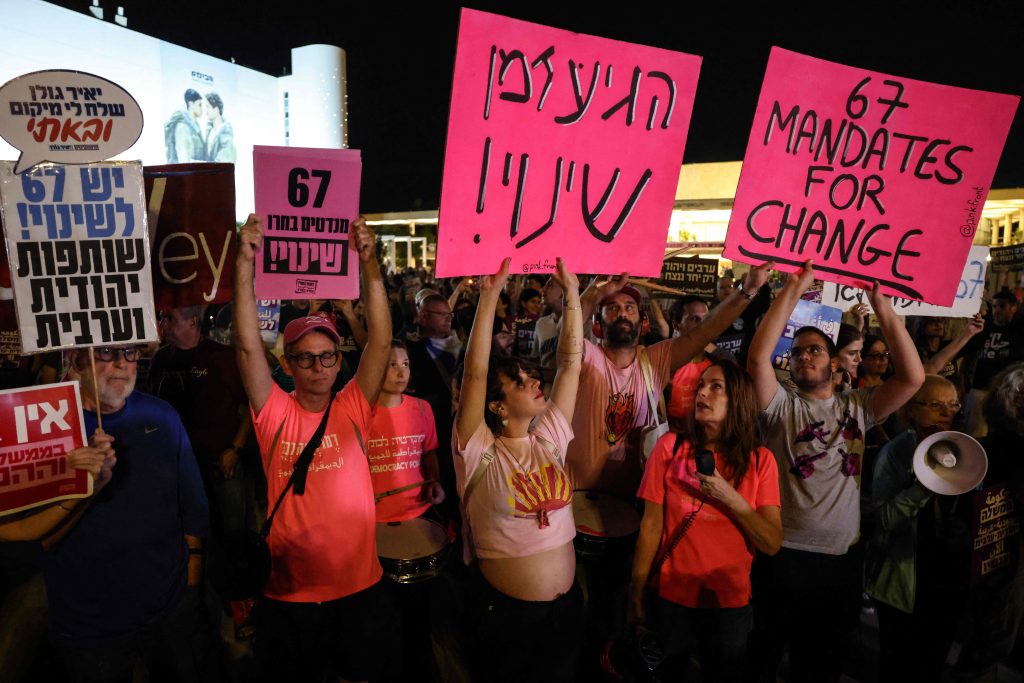
The October 27, 2026, Israel general election has ended in a major political deadlock, with neither the pro-Netanyahu right-wing bloc nor the anti-Netanyahu opposition bloc securing the 61-seat majority required to form a government in the 120-seat Knesset. A historic 77.9% voter turnout—the highest figure in decades—propelled Arab-led parties into a decisive “kingmaker” position, winning an all-time high of 19 seats.
Key Developments & Aftermath
- The “Stolen” Election Allegations: Prime Minister Benjamin Netanyahu and his Likud party claimed without evidence that Arab-led parties “stole” the election through irregularities and foreign interference.
Official Stance on Results: On November 1, 2026, CEC Chairman Noam Sohlberg, alongside the head of the Shin Bet and the Attorney General, released a joint statement confirming that even if allegations of foreign influence are investigated, the election results stand and the integrity of the vote is not undermined.
The Opposition Dilemma: Main opposition leader Gadi Eisenkot accused Netanyahu of attempting to delegitimize the democratic process. While a combined coalition of Eisenkot’s bloc and the Arab parties would yield a comfortable 67-seat majority, several right-leaning members within the anti-Netanyahu bloc have historically ruled out formal alliances with non-Zionist Arab factions, leaving government formation in deep limbo.
Next Steps
President Isaac Herzog will officially receive the certified election results on November 4, 2026, after which he will launch consultations with all elected faction leaders to nominate a candidate to try and build a coalition government. The new Knesset is scheduled to be sworn in on November 10, 2026. If both sides fail to negotiate a viable coalition over the coming weeks, Israel will be forced to head into another snap election.
Recent political history of Israel
The recent political history of Israel has been defined by unprecedented political instability, a polarization around Benjamin Netanyahu, and structural shifts in the country’s coalition system. Between 2019 and 2026, the country went through six general elections, driven by razor-thin parliamentary margins and deeply divided political blocs.
The Era of Continuous Elections (2019–2022)
- The Deadlock: Starting in April 2019, Israel entered a cycle of rapid-fire elections. The political landscape fractured into two rigid camps: a right-wing/religious bloc loyal to Netanyahu, and a highly diverse “anti-Netanyahu” bloc spanning the left, center, and parts of the right.
- The Change Government (2021–2022): In June 2021, an unprecedented coalition unseated Netanyahu. Led by Naftali Bennett and Yair Lapid, this government spanned from ideological right-wing parties to the left-wing Meretz, and notably included Mansour Abbas’s Ra’am party—marking the first time an independent Arab faction formally joined an Israeli governing coalition. Ideological fractures caused the government to collapse after a year.
The 37th Government and Judicial Reform Crisis (2022–2023)
- The Right-Religious Coalition: In November 2022, Netanyahu returned to power by forming the most right-wing and religiously conservative coalition in Israeli history, partnering Likud with ultra-Orthodox parties and far-right factions like Otzma Yehudit and the Religious Zionist Party.
- Mass Civil Unrest: In early 2023, the government introduced a sweeping judicial reform package aimed at curbing the power of the Supreme Court. This triggered months of historically unprecedented mass protests, nationwide strikes, and severe pushback from high-ranking military reservists, deeply fracturing Israeli society.
Wartime Politics (2023–2025)
- Emergency Coalition: Following the October 7, 2023, attacks and the outbreak of the Israel-Hamas war, the domestic political dispute over judicial reform was instantly paused. A temporary emergency war cabinet was formed, bringing opposition figures like Gadi Eisenkot and Benny Gantz into the decision-making process.
- Cabinet Fractures: As the military campaign dragged on, political divisions re-emerged regarding post-war strategy, the handling of hostage negotiations, and the universal conscription of ultra-Orthodox citizens. By mid-2024, centrist opposition leaders exited the war cabinet, returning Israel to a highly charged partisan atmosphere.
The 2026 Deadlock
The political saga culminated in the October 27, 2026, general election, which produced a major stalemate. Despite a record 77.9% voter turnout, neither the pro-Netanyahu right-wing bloc (53 seats) nor the primary anti-Netanyahu opposition (48 seats) secured the 61-seat majority needed to govern. This has placed Arab factions, who won a record 19 seats, in a historic “kingmaker” position, leaving the country’s immediate political future highly uncertain.