
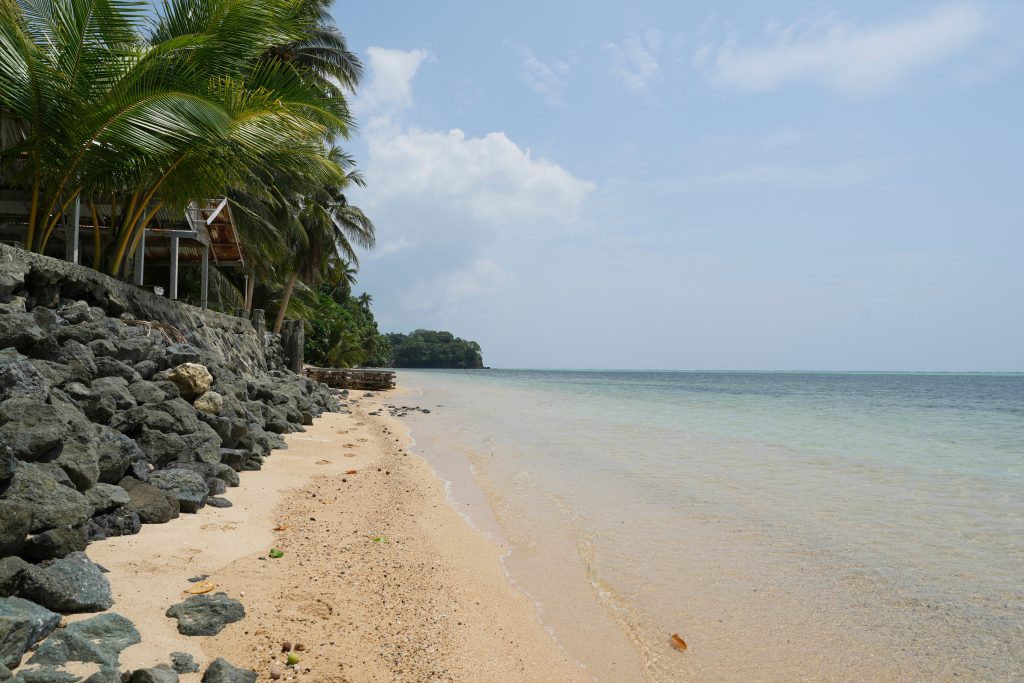
The United Nations Secretary-General’s Special Report warns that global sea levels are rising at an unprecedented rate, reaching a record annual increase of 5.9 mm in 2024. Presented at the Pacific Islands Forum in late August 2026, the report highlights that over 770 million people worldwide live in vulnerable low-lying coastal zones, with a staggering 1.2 billion people facing potential displacement by 2050 if urgent adaptation plans are not put in place.
Key Takeaways from the UN Report
Record-Breaking Acceleration: Driven by exceptional ocean warming and melting glaciers, the annual sea level rise of nearly 6 mm in 2024 marks the highest ever recorded in human history.
Crisis in South Asia: More than 14 million people across low-lying South Asian megacities—specifically Mumbai, Kolkata, and Dhaka—face an “immediate risk” of permanent displacement and land inundation.
Beyond Flooding: The crisis extends past structural damage. Rising seas are actively driving saltwater intrusion, which ruins freshwater supplies, destroys agricultural soil, jeopardises local food security, and spikes exposure to waterborne illnesses.
Economic Catastrophe: Global coastal infrastructure damage is currently evaluated at $1.8 trillion, with projected annual global losses feared to spike between $1.2 trillion and $4 trillion by the end of the century without rigorous climate adaptation.
The Widening Funding Gap
A massive hurdle highlighted in the report is that climate adaptation remains severely underfunded. While developing countries require an estimated $310 billion to $365 billion annually to build resilient coastal infrastructure, establish early warning networks, and monitor sea levels, they received only $26 billion in 2023.
The projected timeline for impacts
The United Nations Secretary-General’s Special Report outlines that 0.5 metres of global sea-level rise is already locked in for this century due to past emissions. However, the timeline of its real-world impacts varies heavily by region. Combined with local problems like land subsidence (sinking ground), certain megacities face far more immediate disruption.
Immediate to Near-Term Timeline (Present–2040)South Asian Delta Megacities: Cities like Mumbai, Kolkata, and Dhaka are categorized under immediate risk. Over 14 million people in these low-lying areas face permanent inundation risks, severe seasonal waterlogging, and infrastructure failure in the coming decades due to a combination of rising waters and land subsidence.
Indian Coastlines: Localized models projecting up to 2040 indicate that 40 coastal districts in India will see intense microclimate shifts. For instance, Mumbai’s monsoon rainfall could surge by 18%, creating an extra week of torrential downpours layered over a rising baseline sea level.